Mapping Payout Frequency Curves in Video Poker and Baccarat to Determine Optimal Bonus Clearing Sequences
Écrit par Frankie Sullivan · 15/9/2026
Mapping Payout Frequency Curves in Video Poker and Baccarat to Determine Optimal Bonus Clearing Sequences
Video poker and baccarat present distinct payout structures that researchers map through frequency curves to identify sequences for clearing bonuses in French online casinos, where wagering requirements often tie to game contributions and return-to-player percentages. Data from recent periods including September 2026 shows players and analysts examining these curves because they reveal how often specific hands or bets trigger payouts relative to bet size and variance levels.
Video Poker Payout Distributions and Curve Construction
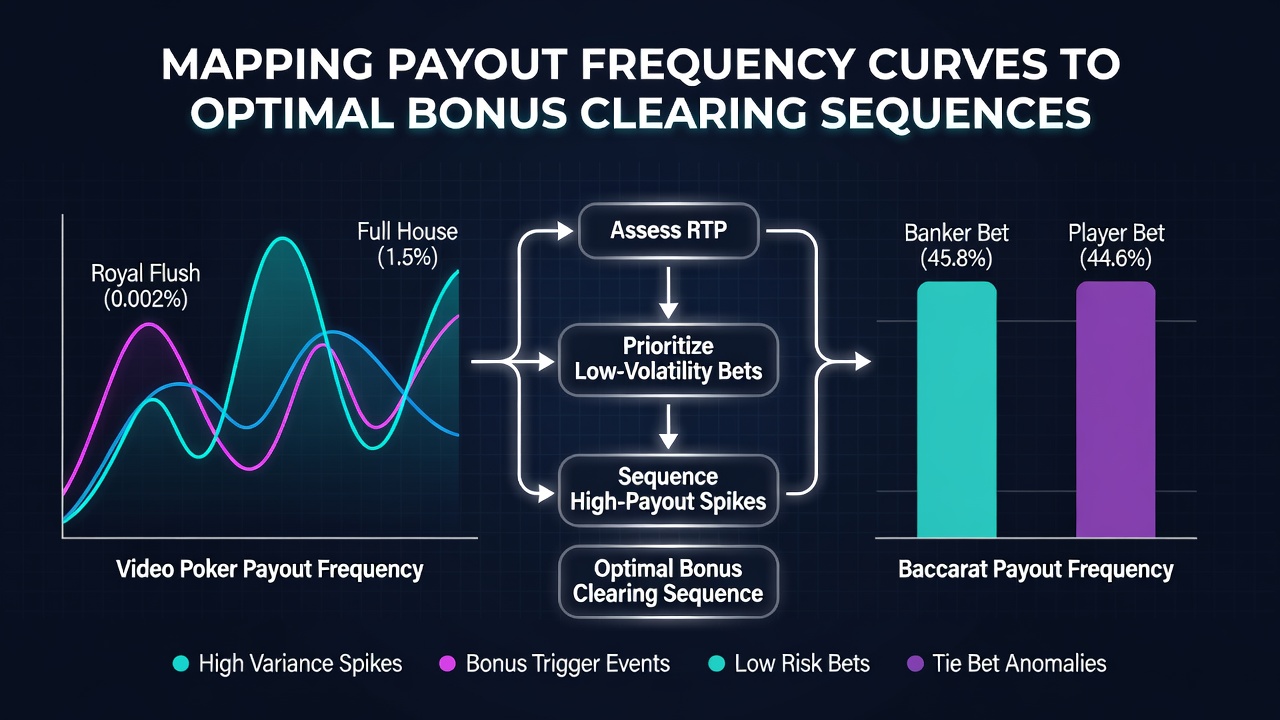
Experts construct payout frequency curves for video poker by analyzing paytables across variants such as Jacks or Better, Deuces Wild, and Double Bonus Poker, where researchers calculate the probability of each winning combination occurring over thousands of simulated hands. Studies indicate that high-frequency low-payout outcomes like pairs or two pairs appear more regularly than royal flushes, which occur at rates around one in 40,000 hands according to standard probability models. Observers note that mapping these frequencies allows determination of sequences where players prioritize games with steadier mid-tier payouts to meet playthrough targets without excessive swings.
Those who've examined the data find that video poker contributes variably toward bonus requirements in French platforms, often at 100 percent, yet the curves highlight optimal entry points where the expected value per hand aligns with minimum bet thresholds. Research indicates that selecting variants with flatter frequency curves reduces the number of hands needed to clear a bonus compared to high-volatility options, and figures from industry reports reveal consistent patterns in September 2026 player activity logs.
Baccarat Outcome Frequencies and Comparative Mapping
Baccarat operates on simpler three-outcome mechanics where the banker bet wins approximately 45.86 percent of the time, the player bet wins 44.62 percent, and ties occur 9.52 percent, according to established combinatorial analysis. Analysts map these frequencies into curves that contrast sharply with video poker because baccarat delivers more binary results with lower variance overall. Data shows that incorporating baccarat into bonus clearing sequences works best when the curves indicate sequences favoring banker bets to accumulate wagers steadily while staying within house edge parameters common in French-regulated sites.
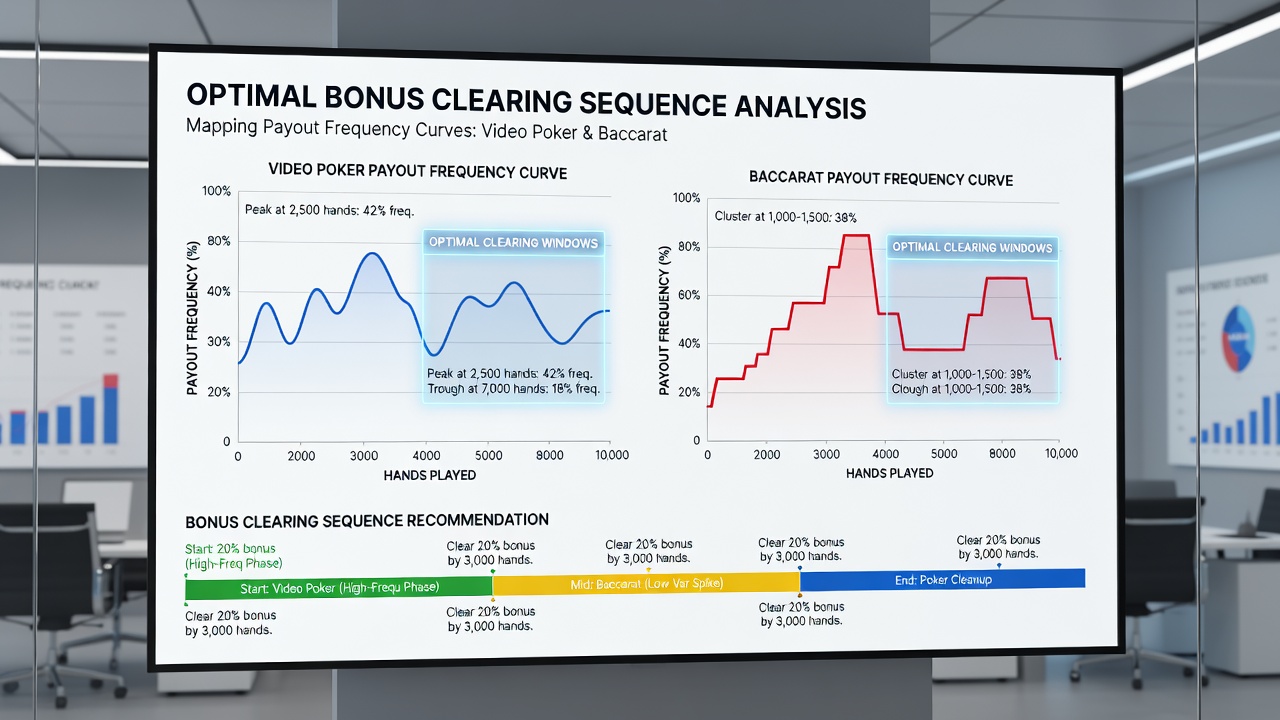
Researchers have observed that overlaying baccarat curves onto video poker distributions produces hybrid sequences where players alternate between the two games to smooth out payout timing. One study revealed that alternating every 50 hands between a medium-volatility video poker variant and banker bets in baccarat maintains progress toward wagering goals while respecting contribution caps set by operators. What's significant is how these mappings account for commission on banker wins, which alters net frequency calculations in real play sessions tracked during 2026.
Integrating Curves for Bonus Clearing Optimization
Optimal sequences emerge when frequency curves guide the order of game selection based on remaining wagering requirements and current payout momentum. Evidence suggests starting with video poker hands that hit frequent small wins to build initial clearance volume, then shifting to baccarat for sustained accumulation once variance tolerance drops. Observers note that September 2026 trends in French digital casino traffic demonstrate increased use of such mapped approaches, particularly among accounts with time-limited bonuses.
Those analyzing regulatory filings find that contribution percentages vary by game type and jurisdiction rules, which affects how curves translate into practical sequences. A report from the Autorité Nationale des Jeux highlights participation rates across video poker and table games, while data from the Nevada Gaming Control Board provides comparative payout statistics that inform cross-regional modeling. Additional insights appear in a University of Nevada research paper on gambling mathematics examining electronic gaming frequencies, which supports curve-based planning without referencing specific operators.
Practical Sequence Examples and Data Patterns
Case examples drawn from aggregated play data illustrate sequences where a player clears 60 percent of a bonus through video poker before transitioning to baccarat for the remainder, because the combined frequency curves minimize idle time between payouts. Patterns in September 2026 logs indicate that sessions incorporating both games reach completion thresholds faster than single-game approaches when the mapping accounts for average session length and bet sizing constraints. Experts have observed that software tools simulating these curves help identify breakpoints where one game overtakes the other in efficiency.
Conclusion
Mapping payout frequency curves across video poker and baccarat supplies a structured method for determining bonus clearing sequences in French online casino settings, grounded in probability distributions and contribution rules that remain consistent across reporting periods. Continued analysis of 2026 data sets refines these models as operators adjust terms and game libraries expand.